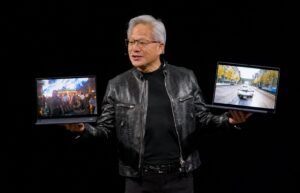



NVIDIA has unveiled RTX Spark, a new superchip for a new generation of Windows PCs built around personal AI agents. It combines a Blackwell RTX GPU with a 20‑core Grace CPU, delivering up to 1 petaflop of AI compute and up to 128GB of unified memory. NVIDIA says it is enough to run language models with up to 120 billion parameters and 1-million-token context windows directly on the device.
In a launch statement, NVIDIA founder and CEO Jensen Huang said,
“With RTX Spark and Microsoft Windows, you ask, and the PC does the work… This is the new PC. The personal AI computer.” Microsoft said it aims to bring “unmetered intelligence to every home and every desk with Windows,” with RTX Spark systems at the core of that strategy.
Together, they present the chip as a reset for what a PC can do, shifting it from running apps to hosting always‑on AI teammates.
Full CUDA, RTX, and Windows-Native Agents
RTX Spark does not launch alone. It taps NVIDIA’s full CUDA and RTX stack, including GPUs, AI libraries, and NIM services, so developers can tune and deploy models directly on the device. NVIDIA says the same software that powers its DGX Spark supercomputers now scales down to RTX Spark PCs, letting creators use many of the same tools on a laptop they would use in a lab.
Microsoft is also wiring RTX Spark into Windows. New Windows‑native agents sit behind the taskbar and other system surfaces, while the OS and NVIDIA’s OpenShell runtime work together to control what those agents can access. A shared security layer uses new Windows controls and OpenShell rules to decide which queries stay on the local model and which, if any, go to the cloud.
Both companies say this on‑device focus addresses concerns about latency, privacy, and cloud-based AI subscription costs. By keeping big models and long chats on the machine, RTX Spark PCs respond faster and avoid sending sensitive data to outside servers unless the user agrees. Major partners such as ASUS, Dell, HP, Lenovo, Microsoft Surface, and MSI plan to launch RTX Spark laptops and small desktops this autumn, with Acer and Gigabyte to follow.
Huang summed up the shift by saying, “The PC is being reinvented,” while Microsoft described RTX Spark as a “real breakthrough” on the way to its vision of everyday AI on Windows.
READ MORE: Here’s Why AI Coins Like Worldcoin and Venice Token are In a Bull Run