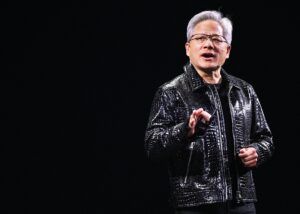



NVIDIA has started pitching its new Vera central processors to Chinese clients and says they could arrive as early as August. The company has also told customers they can begin placing orders for the chips now.
World’s leading company by market capitalization, NVIDIA, designed Vera as its first standalone CPU for AI data centers and autonomous AI systems, not just as a helper chip. Engineers designed the processor to handle key computing tasks for AI agents that need to run many operations on their own. At Computex, Nvidia said Vera can deliver up to 1.8 times the performance of leading x86 server chips.
Vera is already in full production, sources who talked to Reuters said. NVIDIA is presenting the device as part of a bigger AI data center stack that includes its GPUs, networking gear, and software platforms. CEO Jensen Huang announced earlier this year that major worldwide customers such as Anthropic, OpenAI, and SpaceX will be among the first big users.
How Chinese Customers Plan to Use Vera
NVIDIA’s market share of advanced AI hardware in China has dropped sharply due to U.S. export controls and China’s push for local chips. Now the company sees Vera as one way to rebuild business in the country while still complying with U.S. rules.
According to one source, a major Chinese cloud provider plans to order more than 300 servers, each with two Vera CPUs. At first, Chinese clients intend to deploy these chips only in overseas data centers for testing, not in mainland China, another person said. These companies will then decide on larger orders after seeing how Vera performs under real workloads.
Engineers designed the processor to handle key computing tasks for AI agents that need to run many operations on their own. The timeline could still shift due to export license reviews and changing demand, as earlier episodes involving H200 sales to China have shown.
But taking orders now allows Nvidia time to line up manufacturing and gives Chinese consumers a smoother road to new AI gear. If Vera tests go well, these CPUs might be a crucial component of next-generation AI data centers on both sides of the Pacific.
READ MORE: XRP Price Prediction: Here’s Why Ripple Token Has Plunged and What’s Next