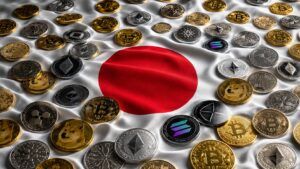



SBI Securities and Rakuten Securities are preparing to launch crypto investment trusts focused on highly liquid assets such as Bitcoin and Ether, with each group developing and distributing them within its existing business.
According to a Sunday Nikkei report, SBI plans to sell funds created by its asset management arm, SBI Global Asset Management. Rakuten is taking a similar approach with Rakuten Investment Management, aiming to let users buy and sell the new crypto funds directly through its popular smartphone brokerage app.
Lowering the Barrier to Crypto Exposure
Most Japanese retail investors who want crypto currently need a separate exchange account and must manage their own wallets. With these new products, SBI and Rakuten customers will instead get Bitcoin and Ether exposure through the same securities accounts they already use for stocks and mutual funds.
The firms say the trusts will hold spot crypto and wrap it as traditional investment products, charging management and custody fees. This setup can attract investors who are interested in digital assets but do not want to manage private keys, handle on-chain transfers, or undergo additional KYC checks at crypto exchanges.
Japan’s Financial Services Agency is considering easing requirements to allow cryptocurrencies in investment trusts and exchange-traded funds. The government has previously authorized a measure to reclassify crypto as a financial product under the Financial Instruments and Exchange Act, with amendments scheduled to take effect around fiscal 2027.
Regulators also want to refresh the Investment Trust Act by roughly 2028, so funds can formally hold crypto as an asset class. Of 18 big brokerages surveyed by Nikkei, 11, including Nomura and Daiwa, are eyeing the creation of crypto funds when the new rules come into effect.
SBI, Rakuten, and the Next Phase of Japan’s Crypto Market
SBI is reportedly exploring more advanced products, such as a dual Bitcoin and XRP ETF and a gold plus crypto composite fund, though those ideas still require regulatory approval. The group has set an internal goal of managing roughly 5 trillion yen, about 33 billion dollars, in crypto-linked assets within three years.
Rakuten, meanwhile, sees crypto investment trusts as a natural extension of its online brokerage and points program ecosystem. As these in-house trusts roll out and rules evolve toward 2028, Japanese investors may soon treat Bitcoin and Ether more like regular portfolio holdings, while traditional brokers compete directly with crypto exchanges for fees and client flows.
READ MORE: Dogecoin Forms a Bullish Pattern as Soaring Crude Oil Price Poses a Risk