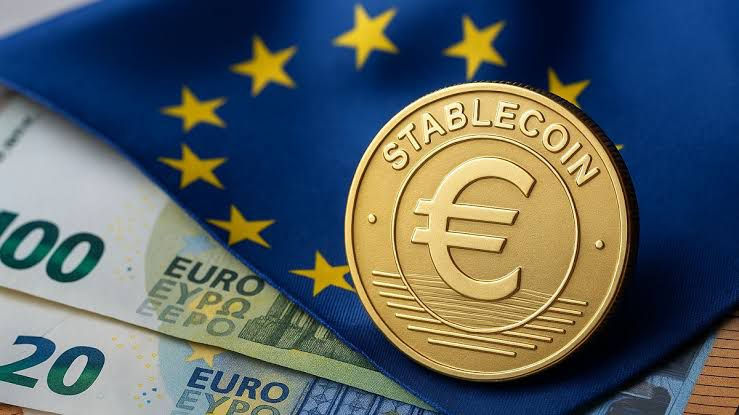


A consortium of major European banks has formed a new company, Qivalis, to launch a euro‑pegged stablecoin in the second half of 2026. The project aims to offer a regulated, bank‑backed alternative to dollar stablecoins and give Europe its own onchain payment rail.
Who Is Behind Qivalis and How the Coin Will Work
At least ten large banks, including BNP Paribas, ING, UniCredit, CaixaBank, KBC, Danske Bank, SEB, Raiffeisen Bank International, DekaBank, and Banca Sella, back Amsterdam‑based joint venture Qivalis. Former Coinbase Germany head Jan‑Oliver Sell serves as CEO, with former UK regulator and NatWest chair Howard Davies as chairman.
The group wants to make a fully euro-backed stablecoin that is worth one euro for every euro it is worth. The Dutch central bank (DNB) will issue the token under an Electronic Money Institution license. It will also be set up to follow the EU’s Markets in Crypto-Assets Regulation (MiCA).
With near-instantaneous, inexpensive transfers between exchanges and institutional desks, Qivalis claims the stablecoin will initially concentrate on cryptocurrency trading and digital asset settlement. In the long run, the consortium hopes to grow into supply-chain flows, tokenized asset settlement, programmable invoices, and cross-border payments.
Why European Banks Want A Euro Stablecoin
Euro stablecoins currently make up a small slice of the global stablecoin market, which is dominated by dollar tokens like USDT and USDC. The only sizable euro stablecoin today is Societe Generale’s SG‑FORGE product, with around 64 million euros in circulation.
European regulators, including the European Central Bank, have warned that private stablecoins could drain deposits from banks and weaken monetary policy if they grow without guardrails. Qivalis pitches its design as the opposite: a bank‑led, MiCA‑compliant instrument that keeps reserves inside the regulated system and aligns with ECB goals for “strategic autonomy” in payments.
A unified euro stablecoin, according to the consortium, can help lessen the fragmentation of national payment systems and provide European fintechs with a reliable foundation upon which to grow. According to Qivalis, it is already in discussions with significant cryptocurrency exchanges and liquidity providers to publish the token on a number of platforms after it launches in late 2026.
Qivalis needs to complete its technical stack, which includes reserve management systems and blockchain infrastructure, and obtain its EMI license from DNB prior to launch. Additionally, more banks are welcome to join the consortium, which might increase distribution and improve its balance sheet.
READ MORE: Ethereum Price Prediction for March: Will ETH Crash Further or Rebound?