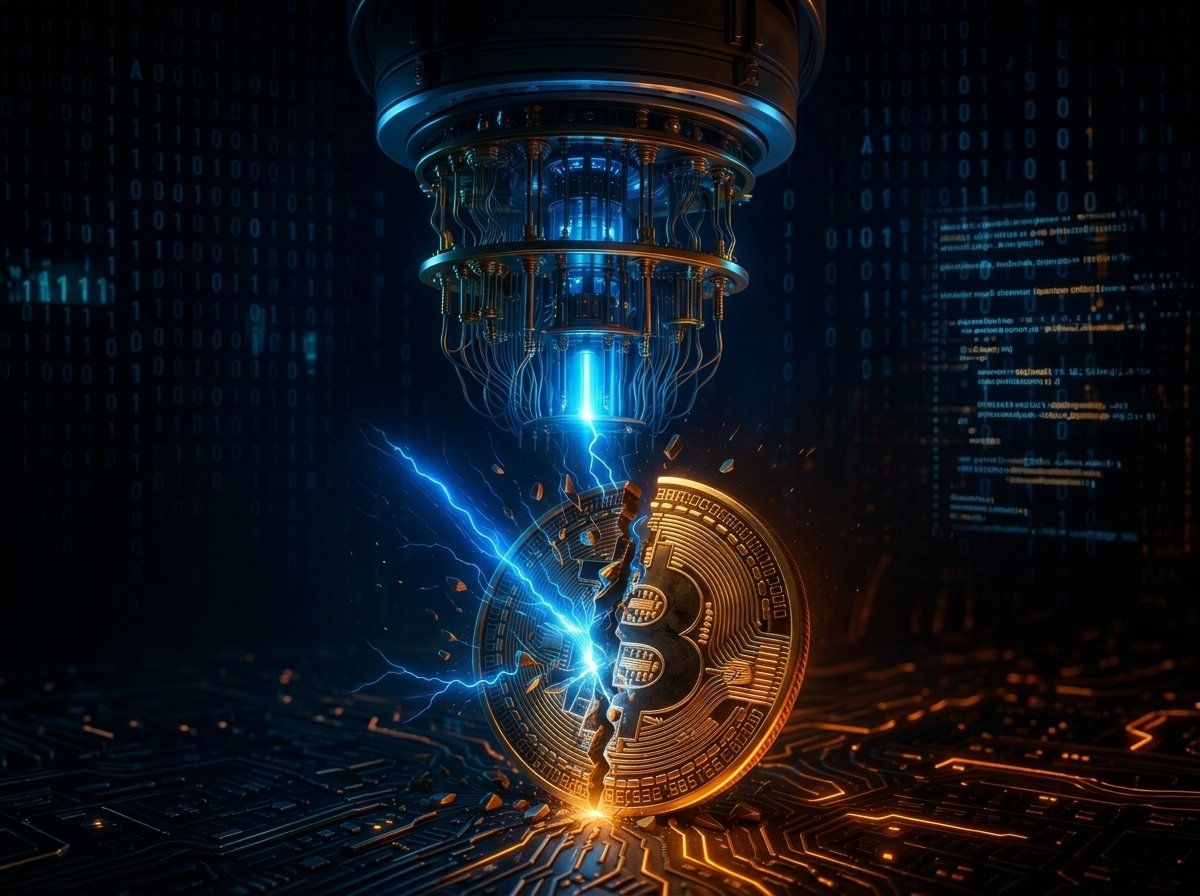


A new study linked to Google’s quantum research suggests a future large quantum computer could crack a single Bitcoin wallet in minutes. The paper models how powerful quantum chips might solve the math behind Bitcoin’s security much faster than today’s machines. In the scenario many reports highlight, a strong enough quantum system could break a wallet’s public key in about nine minutes once certain conditions are met.
The study does not claim this is possible with current hardware. Instead, it estimates how many logical qubits and how much error correction a quantum computer would need. Researchers argue that, at that scale, today’s public‑key cryptography looks vulnerable, including the elliptic curve scheme Bitcoin uses.
How Quantum Computers Threaten Bitcoin’s Cryptography
Bitcoin relies on elliptic curve digital signatures to prove that a wallet owner approved a transaction. A classic computer would take an unrealistic amount of time to reverse a public key into a private key. A large enough quantum computer running Shor’s algorithm could do this much faster by exploiting properties of quantum states.
The nine‑minute figure usually assumes that a user has already broadcast a transaction, which exposes their public key on the blockchain. An attacker could then target that key before the network fully confirms the transaction. If they succeed, they could sign a conflicting transaction and try to redirect the same coins.
Why Experts Say the Threat Is Long Term
Most cryptography experts say this scenario remains theoretical for now because quantum hardware is still very limited. Even optimistic roadmaps place such large, error‑corrected quantum systems many years away, and they would be extremely expensive to run. Many researchers also argue that Bitcoin and other networks have time to upgrade to quantum‑resistant schemes.
Developers already study post‑quantum signature algorithms that do not break under Shor’s algorithm. Some proposals suggest moving coins to new addresses that never reveal their public keys, or migrating to new signature types in a hard fork. In practice, this means early holders and long‑dormant wallets would face the most pressure to move once a credible quantum threat appears.
The main takeaway is that quantum risk is real but not immediate. Modern quantum devices cannot yet break real‑world wallets, and the industry has years to prepare. Still, the study is a clear reminder that cryptography is not static and that public networks must plan several steps ahead.
READ MORE: Block Stock: Is Jack Dorsey’s XYZ a Bargain or a Value Trap?