


The recent crypto crash accelerated over the weekend as Bitcoin and most altcoins slumped to their lowest levels in months, and investors shed billions of dollars. Liquidations jumped, and the Crypto Fear and Greed Index slumped to the lowest level since last year.
What Caused the Crypto Crash?
The ongoing crypto crash was triggered by several major catalysts. Technical factors played an important role, as evidenced by several BanklessTimes’ Ethereum and Bitcoin price predictions. The two coins remained below all moving averages and formed bearish flags on the daily and weekly charts.
Other external factors contributed to the crash. For example, the nomination of Kevin Warsh to become the next Federal Reserve Chair was seen as being bearish for the crypto market. Warsh has expressed some skepticism about the crypto industry in the past.
He is also widely regarded as an interest-rate hawk who recently changed his views to please Donald Trump. Therefore, there is a risk that he will change his mind once he becomes Federal Reserve Chairman, just as Jerome Powell did.
Most importantly, the role of Bitcoin as a digital gold has been debunked in recent years, as it has consistently declined during major challenges or risks. For example, it crashed on October 10 last year when Donald Trump threatened to impose tariffs on China. It has also declined amid the potential risks of a new war in the Middle East.
The crypto crash accelerated as liquidations jumped, with data showing that bullish positions worth over $2 billion have been liquidated in the past few days. Such liquidations happen when exchanges close bullish trades when losses mount to safeguard their margins.
READ MORE: Silver Price at Risk of a Steeper Crash as SLV ETF Outflows Surge
Is it Safe to Buy the Dip as Fear and Greed Index Slips?
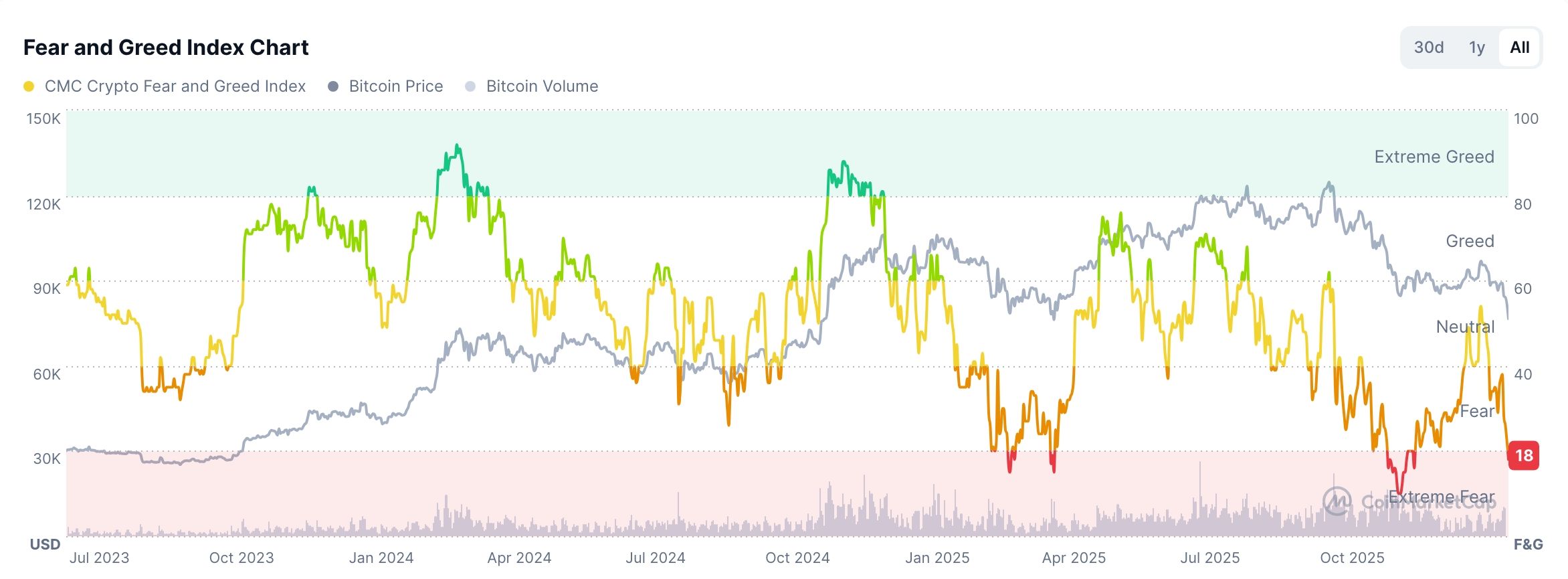
The main question among cryptocurrency investors is whether it is safe to buy the crypto dip now that the Fear and Greed Index has moved to the extreme fear zone of 18. In most cases, crypto bull runs happen when the gauge has moved to the extreme fear zone, as we saw in the recent recovery.
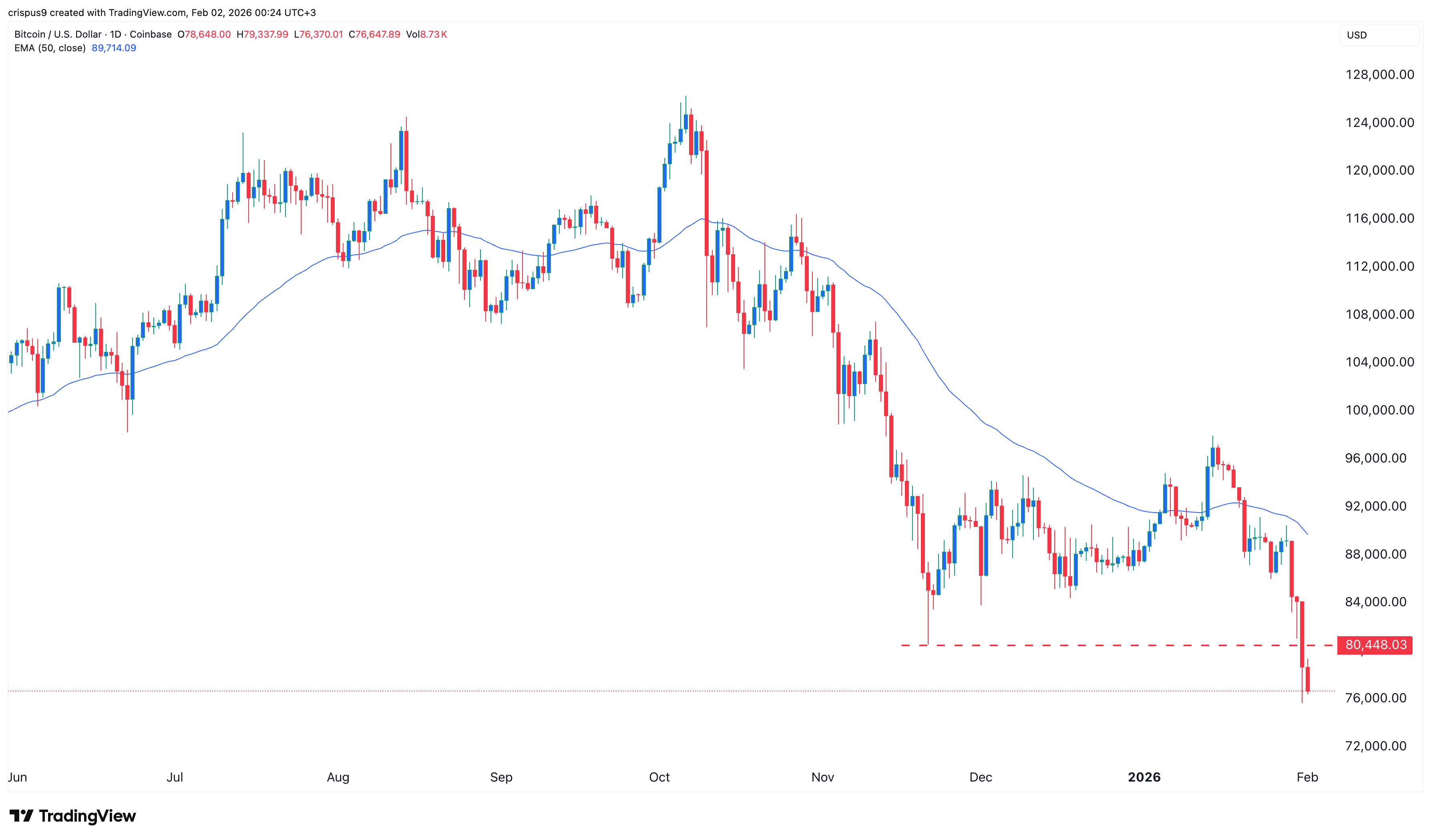
Still, there is a risk that buying the dip today is akin to catching a falling knife. Besides, as the chart above shows, Bitcoin remains below all moving averages and the Supertrend indicator.
Additionally, oscillators such as the Relative Strength Index (RSI) and the MACD have continued to decline over the past few months. This indicates that bearish momentum persists.
Therefore, the most appropriate approach, as Michael Novogratz predicted, is to wait for the Bitcoin price to rise above the key resistance levels at $100,000 and $103,000 to confirm the bullish outlook.
A major risk of buying Bitcoin and other cryptocurrencies at these levels is a dead-cat bounce, in which an asset in free fall rebounds and then resumes the downtrend.
READ MORE: Solana Price Forms a Rare Bullish Pattern as Transactions Hit 2.2 Billion