



The MSTR stock price is hovering near its lowest level this year as Bitcoin remains in a narrow range. Strategy was trading at $121 on Thursday, down by over 73% from its 2025 high.
MSTR Stock is at Risk of Further Downside
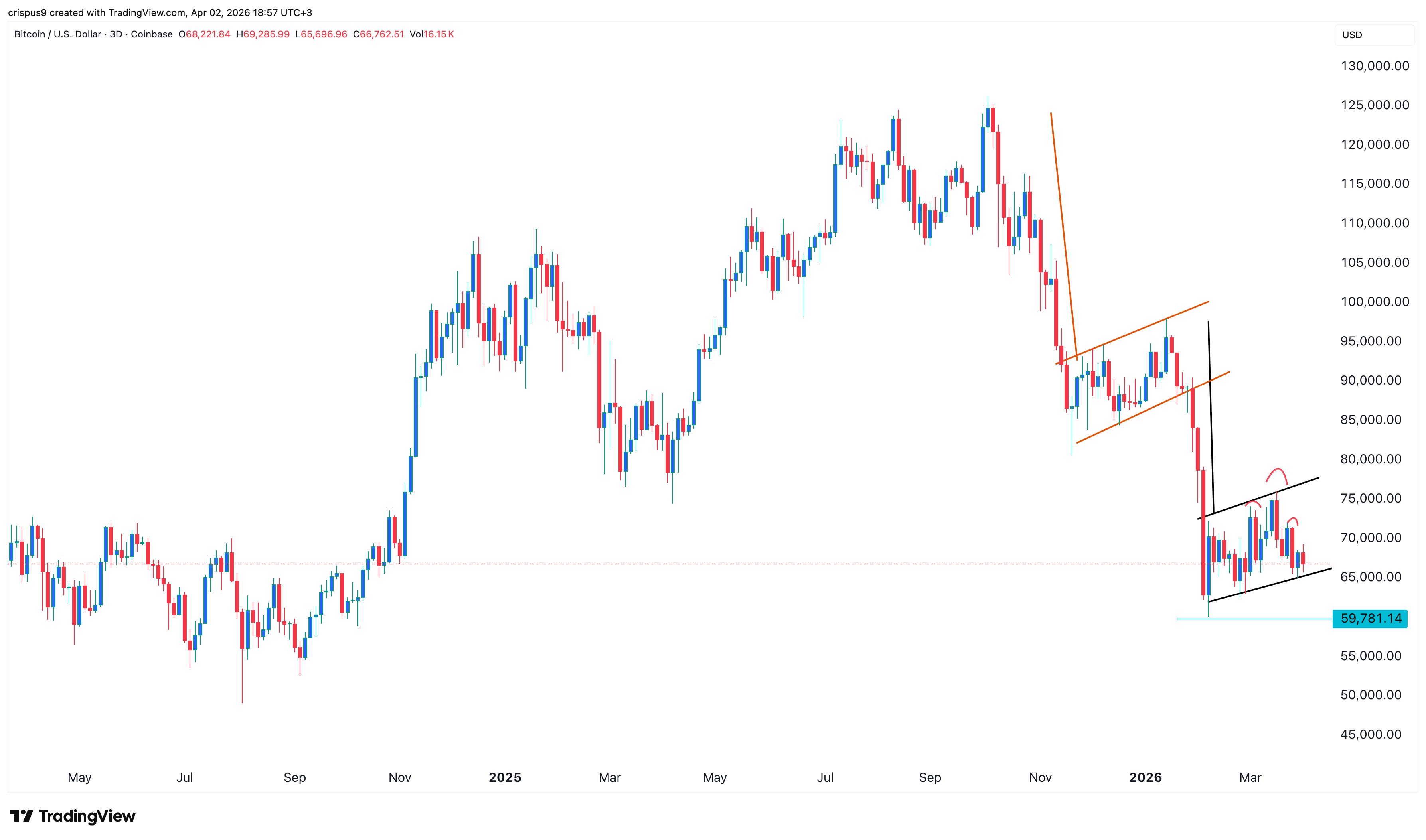
MicroStrategy stock may continue to fall in the near term, as Bitcoin has flashed numerous bearish chart patterns, including a second bearish flag since October last year. It formed a death cross pattern and has remained consistently below the Supertrend indicator.
At the same time, the Federal Reserve may maintain a highly hawkish stance due to rising crude oil and natural gas prices, which will likely lead to a higher inflation rate. The OECD believes that the US inflation will end the year at above 4%.
The MSTR stock has other risks, including the fact that its unrealized losses have continued to rise, while the net asset value (NAV) remains below 1, eroding the premium it had a few months ago.
At the same time, the company has increased its at-the-market (ATM) authorization, meaning that it will continue diluting investors in the coming years. Its outstanding shares have already jumped from below 80 million in 2021 to over 320 million today.
READ MORE: S&P 500 Index Analysis: Will VOO and SPY Stocks Rebound in April?
MSTY ETF has a 302% Dividend Yield
The MSTR stock price has dropped by over 23% this year, underperforming the broader stock market.
With demand for yield rising, investors are now turning to Strategy’s preferred shares, which offer double-digit dividend yields and are secured by the company’s balance sheet.
Other investors are turning to the YieldMax MSTR Option Income Strategy ETF (MSTY), which has a dividend yield of 302%. This makes it one of the top-yielding funds in the United States.
The fund leverages the covered call strategy to generate returns. It does this by creating a synthetic long exposure to MSTR stock and then writing (selling) call options on it. By doing this, the fund generates a return by taking the options premium and distributing it to investors.
Still, the main limitation of this approach is net asset value (NAV) erosion, which often outpaces distributions. Historically, most covered call ETFs have underperformed the underlying asset in total return.
Recently, however, the MSTY ETF has outperformed MSTR this year. Its total return stands at-14.76%, compared to MSTR’s-23.32%.
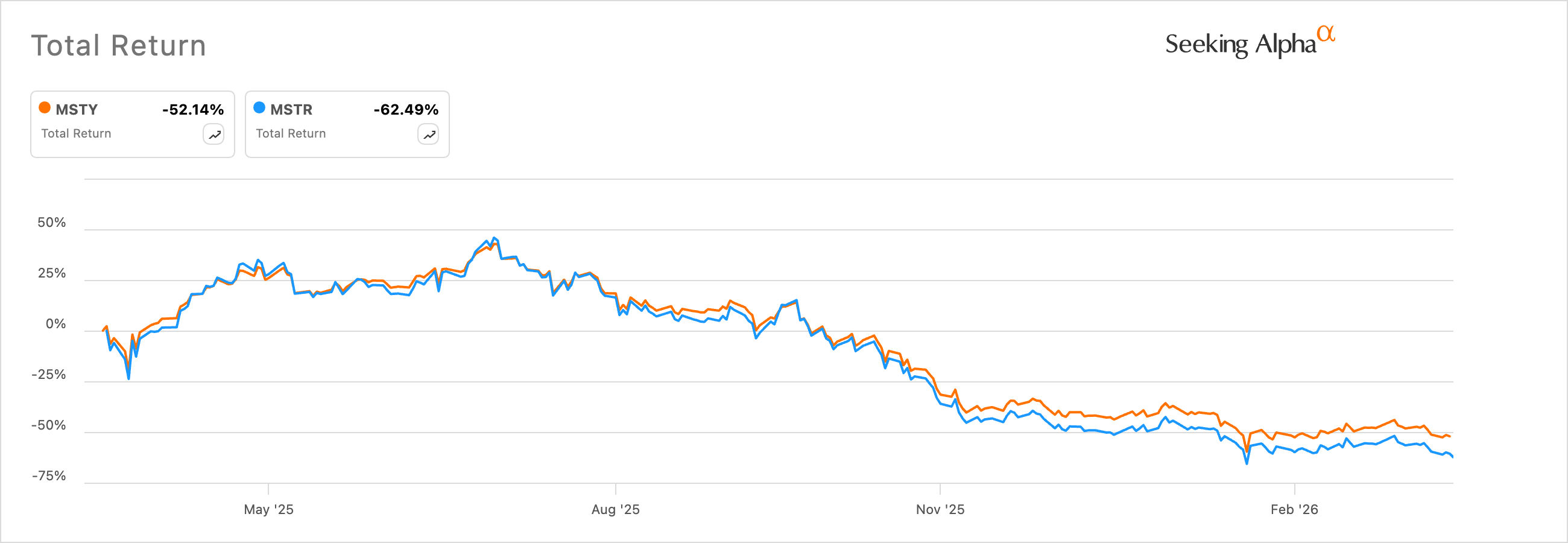
Similarly, as the chart above shows, MSTY’s return in the last 12 months was minus 52% compared to MSTR’s minus 62%.
READ MORE: Cheap Micron Stock Forms Megaphone Pattern as DRAM Prices Drop